Lesson 1.4
Wave degrees & notation
The ordering system of timeframes
In short: Every wave is part of a larger one and consists of smaller ones — the wave
degrees are the addressing system for this. Each level has its own set of characters.
A degree is determined by form, not by the clock.
The Problem to Be Solved
A complete cycle forms only two waves at the next higher level. This inevitably raises a bookkeeping question: If every wave is part of a larger one and itself consists of smaller ones — how do you uniquely label a specific wave? The answer is the system of wave degrees (Degrees). Elliott originally named nine degrees; today's standardized scheme comprises fifteen named degrees with fixed notation.
The Notation Ladder
- Motive waves alternately use three sets of Roman numerals, then three sets of Arabic numerals.
- Corrective waves correspondingly alternate between three sets of uppercase letters and three sets of lowercase letters.
- The pairing is fixed: Roman numerals with lowercase letters, Arabic numerals with uppercase letters.
- Within each block of three, the styling distinguishes the level: encircled → parenthesis → plain.
- Roman numerals are lowercase below the Minor degree (i, ii, iii) and uppercase above the Primary degree (I, II, III).
| # | Degree | Motive (5s) | Corrective (3s) |
|---|---|---|---|
| 1 | Supermillennium | [1] [2] [3] [4] [5] | [A] [B] [C] |
| 2 | Millennium | (1) (2) (3) (4) (5) | (A) (B) (C) |
| 3 | Submillennium | 1 2 3 4 5 | A B C |
| 4 | Grand Supercycle | [I] [II] [III] [IV] [V] | [a] [b] [c] |
| 5 | Supercycle | (I) (II) (III) (IV) (V) | (a) (b) (c) |
| 6 | Cycle | I II III IV V | a b c |
| 7 | Primary | [1] [2] [3] [4] [5] | [A] [B] [C] |
| 8 | Intermediate | (1) (2) (3) (4) (5) | (A) (B) (C) |
| 9 | Minor | 1 2 3 4 5 | A B C |
| 10 | Minute | [i] [ii] [iii] [iv] [v] | [a] [b] [c] |
| 11 | Minuette | (i) (ii) (iii) (iv) (v) | (a) (b) (c) |
| # | Degree | Motive (5s) | Corrective (3s) |
| 12 | Subminuette | i ii iii iv v | a b c |
| 13 | Micro | [1] [2] [3] [4] [5] | [A] [B] [C] |
| 14 | Submicro | (1) (2) (3) (4) (5) | (A) (B) (C) |
| 15 | Miniscule | 1 2 3 4 5 | A B C |
Because the pattern repeats every three degrees, the same symbols reappear at widely separated levels. In practice, this creates no risk of confusion — the timeframe you are working on always makes it clear which level is meant. Discipline is important: Each level of your count gets its own set of characters.
Degrees Are Defined by Form — Not by the Clock
A degree is not defined by price or time lengths, but by form — and form is a function of both price and time. Waves of the same degree can last for very different lengths of time; they can be extended or compressed, but the underlying shape remains constant.
Practical Uses of the Addressing System
1. Unambiguity. The degree nomenclature works like latitude and longitude — for example, 'wave
2. Proportion Check. A 'wave 4' that is larger than its entire wave 3 is not a wave 4 — it's a
3. Multi-level confirmation. Analyses improve in quality when multiple degrees point in the
From Degree to Trading Style: The Four Wave Schemas
| Schema | Chart Pair | Trading Style | Typical Holding Period |
|---|---|---|---|
| Very Short Term | Tick + 10-Minute | Scalping | 5 minutes to 1 hour |
| Short Term | 10-Minute + Hourly | Intraday moves | Hours to 1 day |
| Intermediate | Hourly + Daily | Swing Trading | Days to weeks |
| Long Term | Daily + Weekly | Moves of approx. 10% or | 3 to 6 months and longer |
This is precisely the fractality from the next lesson, in its practical trading consequence. (Preview: In Module 6, these classic schemas will become the modern WaveMaster horizon system — Weekly/Daily to H1/M15.)
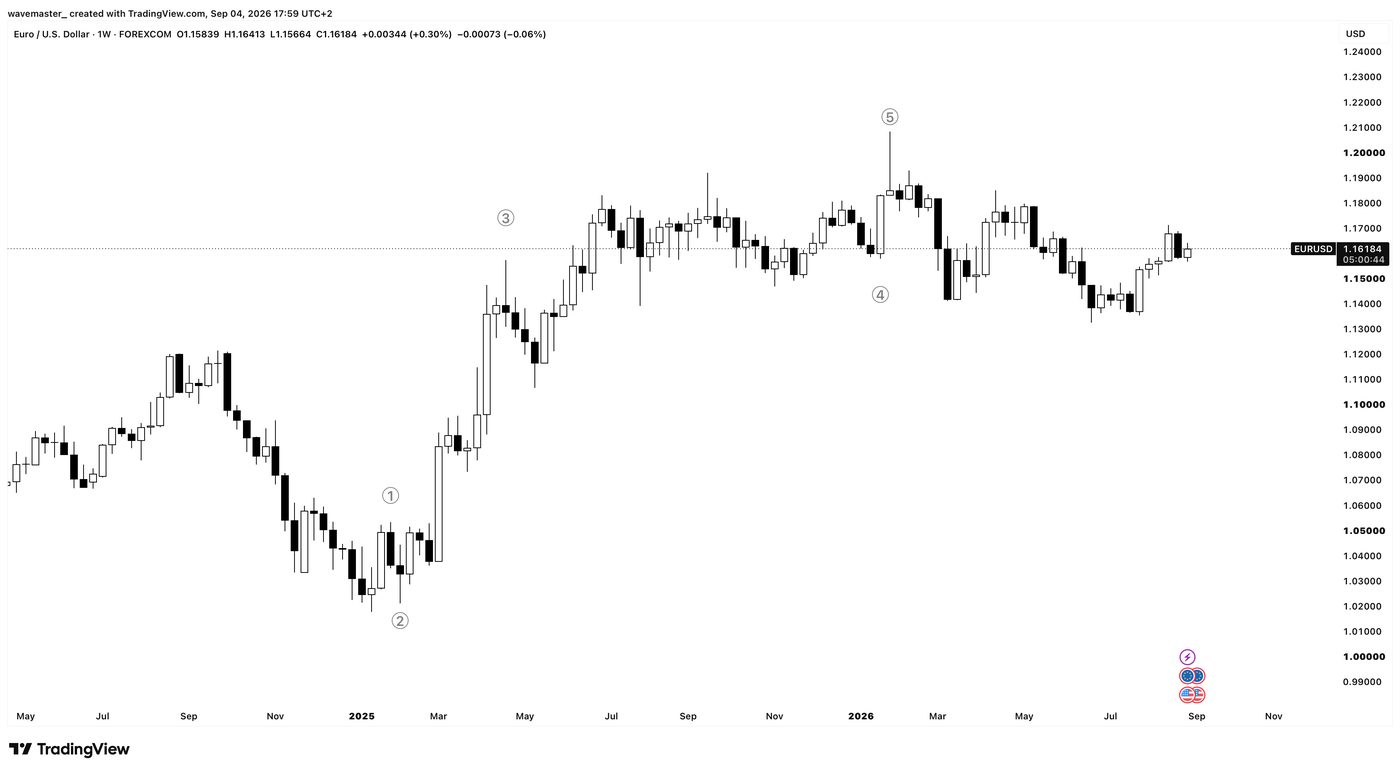
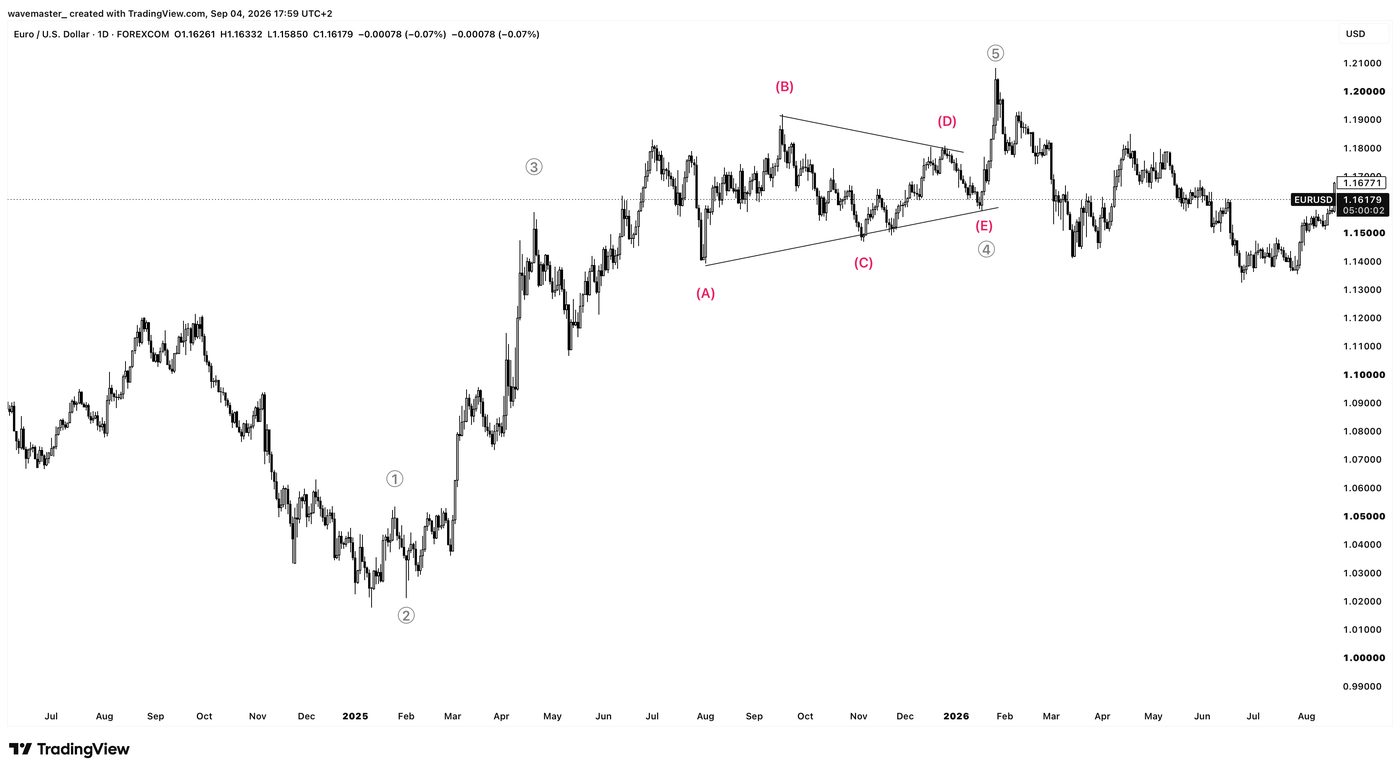
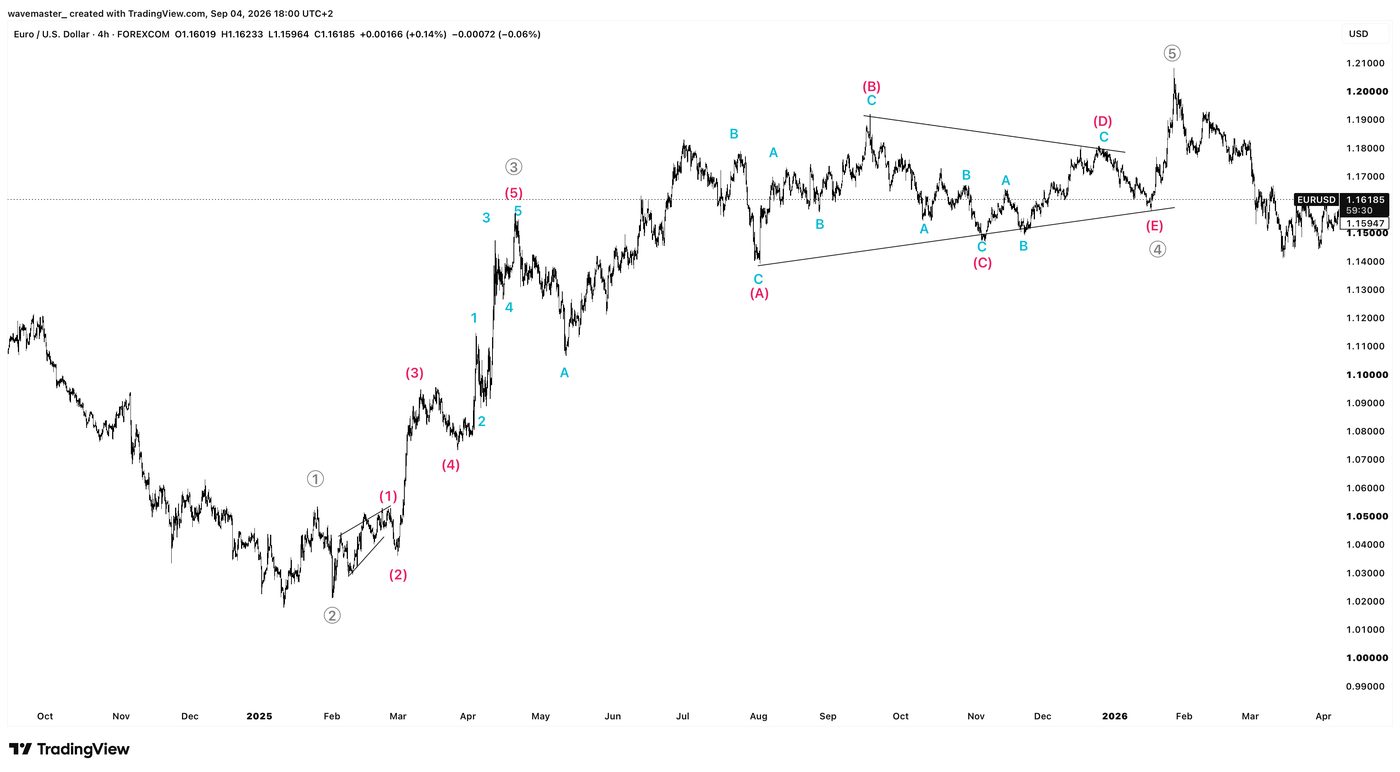
On the first day, the notation ladder seems like bureaucracy. On the first day you pick up a triple-nested count from last week, it seems like a gift. Addresses are for the one who returns.
Knowledge check
1. What determines the degree of a wave?
2. How many degrees did Elliott originally name?
3. Which pairing applies in the notation scheme?
4. Which degree corresponds to the notation '(3)'?
5. True or false: 'The exact degree of an ongoing wave can always be determined unambiguously.'