Elliott Wave Essentials · 30 min · Intermediate
Corrective Waves ABC
Understand the different correction patterns: Zigzag, Flat and Triangle.
Correction Patterns Overview
After every 5-wave impulse movement, a 3-wave correction (A-B-C) follows. There are two main forms:
🔸 ZigZag: Sharp, aggressive correction
🔹 Flat: Sideways correction (with 3 variants!)
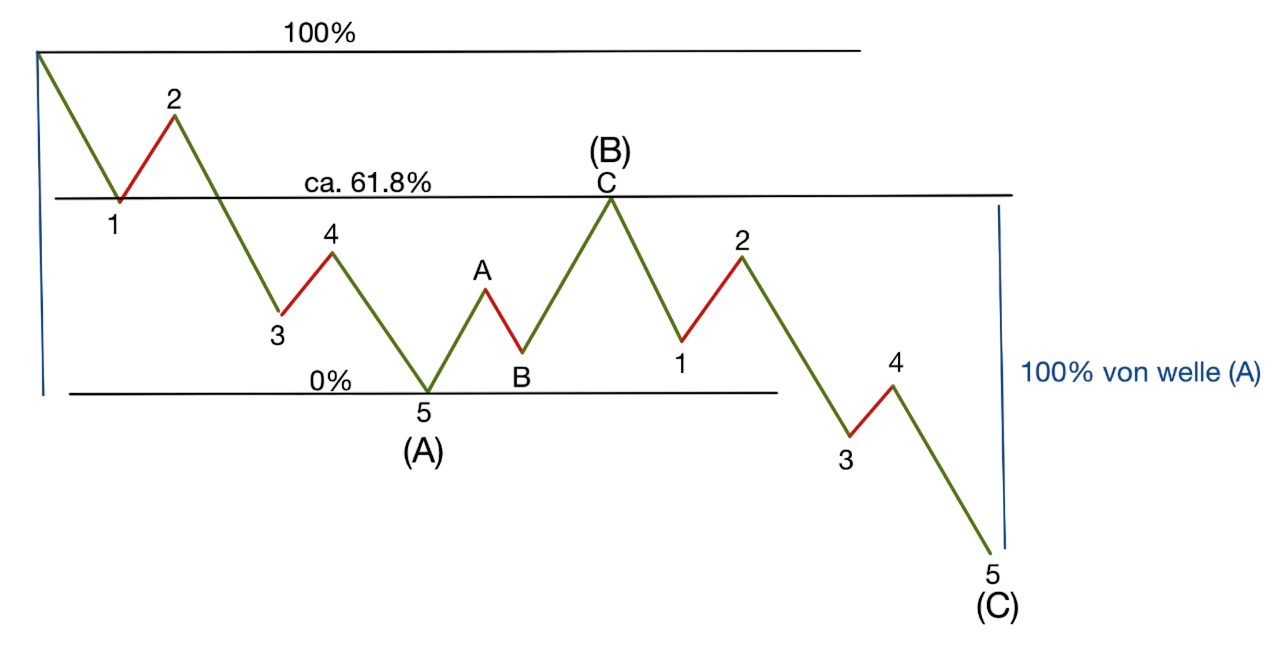
ZigZag (5-3-5) - The Sharp Correction
Structure
- Wave A: 5 waves downward (impulse)
- Wave B: 3 waves upward (correction)
- Wave C: 5 waves downward (impulse)
📉 Very aggressive and sharp
📏 Wave C is usually as long or longer than Wave A
📊 Wave B corrects only 38–61.8% of Wave A
🎯 Common in strong trends.
Trading Tip: ZigZags are dangerous for counter-traders. Wait for Wave C before entering!
Flat Corrections - The 3 Variants
All Flats have the basic structure (3-3-5), but differ in the length of Wave B and C:
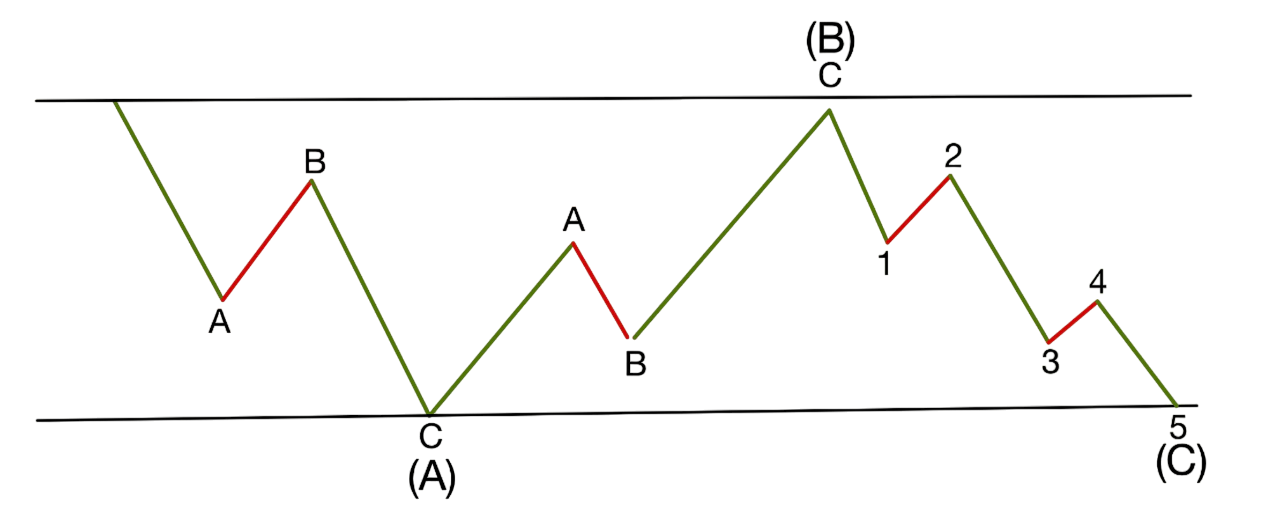
1️⃣ Regular Flat (Normal Flat)
📊 Structure:
• Wave A: 3 waves downward
• Wave B: 3 waves upward (reaches 90–100% of A start)
• Wave C: 5 waves downward (ends at or slightly below A end)
📌 Characteristics:
- Sideways movement - almost horizontal
- Wave B is strong and almost reaches the starting point
- Wave C corrects only slightly
- Shows trend strength - the market wants to continue
💡 Trading Signal: After a Regular Flat, a strong continuation of the main trend usually follows!
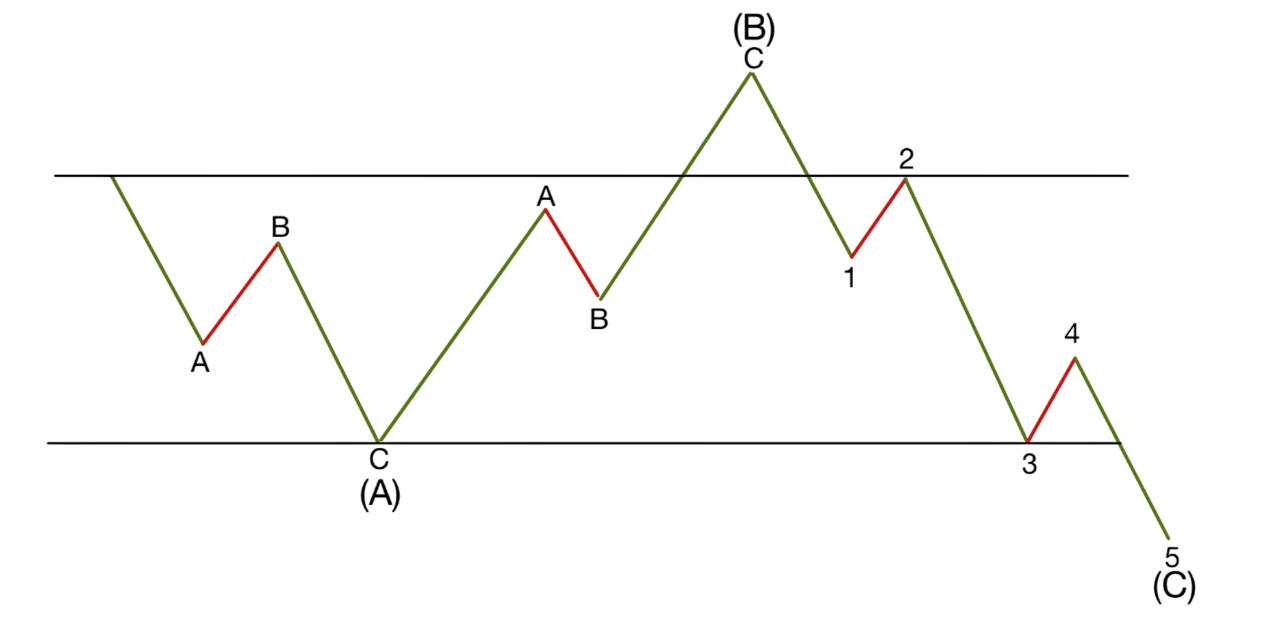
2️⃣ Expanded Flat (Extended Flat)
📊 Structure:
• Wave A: 3 waves downward
• Wave B: 3 waves upward (exceeds A start, 100–138%)
• Wave C: 5 waves downward (ends significantly below A end)
📌 Characteristics:
- Wave B makes a new high above the starting point (bull trap!)
- Wave C is the longest and most aggressive (often 161.8% of A)
- Most common Flat pattern in practice
- Deceives many traders - looks like trend continuation
💡 TRADING TIP: The new high in Wave B is a classic bull trap! Perfect point for short entries when you expect Wave C.
3️⃣ Running Flat (Running Flat)
📊 Structure:
• Wave A: 3 waves downward
• Wave B: 3 waves upward (significantly exceeds A start, >138%)
• Wave C: 5 waves downward (ends ABOVE A end!)
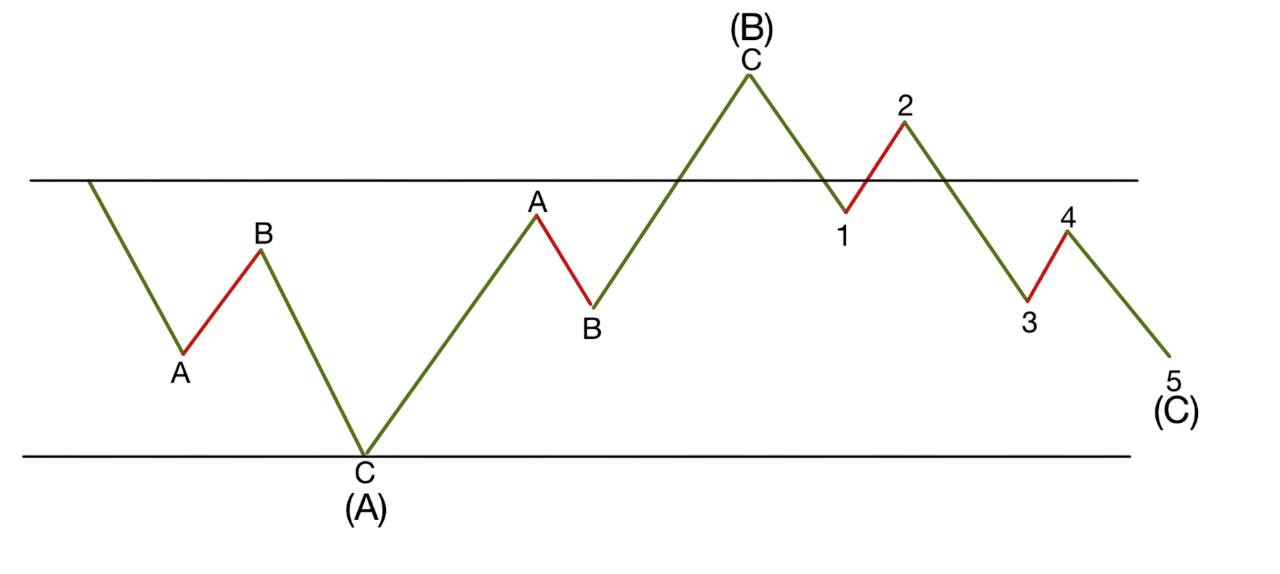
📌 Characteristics:
- Wave C doesn't even reach the low of Wave A
- The "correction" barely corrects - almost no downward movement
- Shows extreme strength of the main trend
- Rarest Flat variant but very powerful
💡 TRADING TIP: Running Flats are the best entry signals! After Wave C, an explosive continuation of the main trend usually follows. The market shows extreme strength!
Comparison Table
| Pattern | Wave A | Wave B Length | Wave C End | Frequency |
|---|---|---|---|---|
| ZigZag | 5 waves | Short (38-62%) | Below A (or =A) | Common |
| Regular Flat | 3 waves | 90-100% | ≈ A end | Medium |
| Expanded Flat | 3 waves | 100-138% | Significantly below A | Very common |
| Running Flat | 3 waves | >138% | ABOVE A end! | Rare |
Key Takeaways
✅ ZigZag = sharp 5-3-5 correction for strong trends
✅ Regular Flat = sideways, shows trend strength
✅ Expanded Flat = most common pattern, B makes new high (bull trap!)
✅ Running Flat = rare but powerful, C ends ABOVE A (best signal!)
✅ All Flats have the structure 3-3-5, differ only in B&C length
Reversibility of structures
Every wave structure shown here can also appear inverted in a different market phase. An impulsive move in an uptrend, for example, appears mirrored in a downtrend.
What matters is always the direction of the higher-degree trend — the patterns stay the same, only their orientation changes.
Keep reading for free
Log in or create a free WaveMaster account to unlock this lesson — and every module, Trading Basics and the Elliott Wave Essentials.